Who is writing?
Read the letterhead, sender, authority, address and contact details. Check whether the sender fits the subject of the letter.
 LetterCheck
Short answer
First check who sent the letter, what it is about, what action it requests and whether it names a date or possible deadline. Always check unclear wording against the source text. Professional advice is useful when legal or financial matters are uncertain.
Four checks
Use this order to separate the wording of the letter from your first assumption.
Read the letterhead, sender, authority, address and contact details. Check whether the sender fits the subject of the letter.
The subject, reason and file or reference number show which matter the letter concerns. Attachments may contain important additions.
Mark the requested action, such as submitting documents, providing details or responding to a decision. Note to whom and by which route.
Look for dates, wording such as “by” or “within”, and instructions on legal remedies. Do not apply one deadline broadly.
Step by step
These steps help you organise the information. They do not replace checking the complete letter.
Note the sender, date, subject and file or reference number. Check that the letter is addressed to you.
Write down what is requested, which documents are named and which authority should receive a response.
Distinguish the letter date, delivery or notice details and any stated deadline. Read instructions on legal remedies carefully.
Read the attachments and keep the original, envelope and notes together. Record any missing pages.
When something remains open, use an official contact route that you found and checked yourself or seek professional advice. Do not click or transfer money immediately because you feel uncertain.
Place deadlines in context
Deadlines depend on the specific letter and procedure. A one-month deadline cannot be applied broadly to every official letter.
A deadline from one particular procedure does not automatically apply to other letters. Professional advice is useful when legal or financial consequences are possible. This is not legal advice.
Unclear or suspicious?
A letter may seem genuine, mistaken or incomplete. An impression alone cannot establish which it is.
Next steps
Keep the letter, envelope, attachments and notes together. Write down open questions instead of filling gaps from memory.
Separate what the letter says from your interpretation. Mark requested documents, contact route and possible deadline passages.
When in doubt, use an official contact route that you checked yourself. Seek professional advice where legal or financial consequences matter.
Organise letters carefully
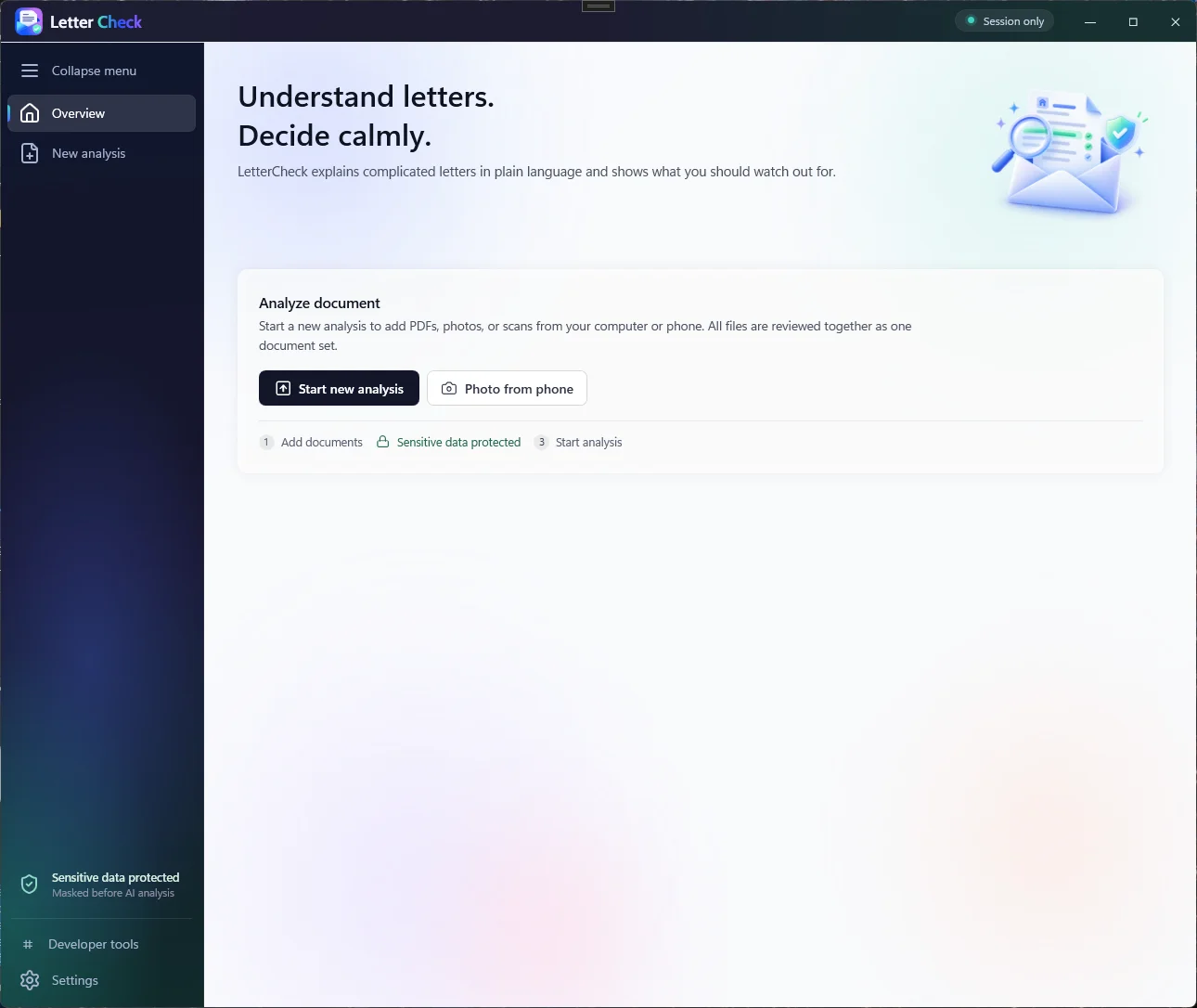
If you want to organise letters step by step, LetterCheck can keep the original text, source, uncertainty and possible checks visible separately.
LetterCheck is coming soon.
Questions and answers
Sources
These references show why the original text, procedure and delivery can matter. They do not replace checking your particular letter or professional advice.
Important: This page gives general orientation. It is not legal advice. Check important details against the original and seek professional advice when legal or financial matters are uncertain.